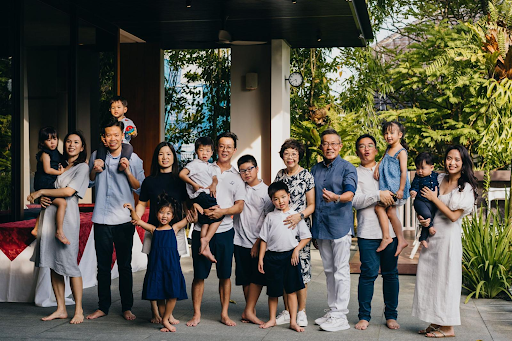
A Family’s Ascent and Enduring Legacy
James Chia was born in 1953 as the fifth of ten siblings, in the then Crown Colony of Singapore, at that point a British port, which was about to undergo a period of political upheaval. His life truly encapsulates the story of Singapore’s transformation and growth, in local parlance, being part of the “Pioneer Group” of Singaporeans who made their own small and large contributions to the success of this nascent state.
James’ grandfather made the bold decision to uproot himself and undertake the arduous, life-changing journey from China, then in the midst of the chaos and conflict that characterised the Century of Humiliation, in hopes of creating a better life for himself and his future family. Following the move to Singapore, James’ father was born locally. Being the son of a recent immigrant without much in the way of resources, he lacked opportunities in life and had to work incredibly long days in the squalor of tropical

weather as the sole breadwinner for the family (James’ mother was a homemaker who had faced the difficult task of raising a large household). He would rise before the crack of dawn to prepare for his day job as a fishmonger in the market, and would toil into the evening as a taxi driver (this was a dangerous job amidst the messy streets full of uninsured and overcrowded pirate taxis of the 1950s and 60s). It was a hard life, one not for the faint of heart, that necessitated grit and resilience in the challenging quest to provide for his family.
Childhood
James was born into this environment of humble beginnings. His childhood home was a farm shared with his extended family. James grew up not just with his nine siblings, but also his aunties, uncles and cousins. Being in the setting of a Kampong, James’ neighbours were also close company, with the households of the Kampong almost amalgamating into
one large community. It made for a lively existence, with James spending much of his time in the company of his brothers. Though they lacked the resources of families today, they made do with what they had, finding joy in the simplicity of life, and the typical trappings of childhood innocence and naivety, with cycling, catching spiders, fishing and swimming in streams being part and parcel of James’ childhood. He fondly recalls his sleeping arrangements, or rather lack thereof, as he had to share a bed with seven of his siblings, as well as the way in which his siblings shared school uniforms to economise. In his words, the struggles and deprivations of life drew the family together, and fostered the tight bonds between family members.

the core of James’s outlook on life and cemented his view that family is paramount and that familial relationships are a bedrock of growth and happiness. His family’s situation was somewhat emblematic of Singapore of the time — just barely keeping afloat without much in the way of creature comforts and the amenities of modern life, yet a carefree place of joy for many.
Adolescence
Education was not all plain sailing for James. Due to the economic circumstances of his family, he often had difficulty affording the bare necessities; Uniforms were few and far between, and stationery had to be well rationed. Even the payment of school fees, then just $2, was a struggle. He recounts one instance during Secondary One when he returned home to obtain the funds from his mother, only to be met with the rude awakening that the money was simply not available. For the next three days, James was forced to make excuses for the unpaid bill, culminating in his punishment and humiliation at the front of the class.
Being in the setting of a Kampong, James’ neighbours were also close company, with the households of the Kampong almost amalgamating into one large community. It made for a lively existence, with James spending much of his time in the company of his brothers. Though they lacked the resources of families today, they made do with what they had, finding joy in the simplicity of life, and the typical trappings of childhood innocence and naivety, with cycling, catching spiders, fishing and swimming in streams being part and parcel of James’ childhood. He fondly recalls his sleeping arrangements, or rather lack thereof, as he had to share a bed with seven of his siblings, as well as the way in which his siblings shared school uniforms to economise. In his words, the struggles and deprivations of life drew the family together and fostered the tight bonds between family members.
James also learned a great deal from his parents, particularly his mother, with the fundamental values of respect for others, honesty and integrity, frugality, and above all, the importance of family being inculcated within him. These experiences formed
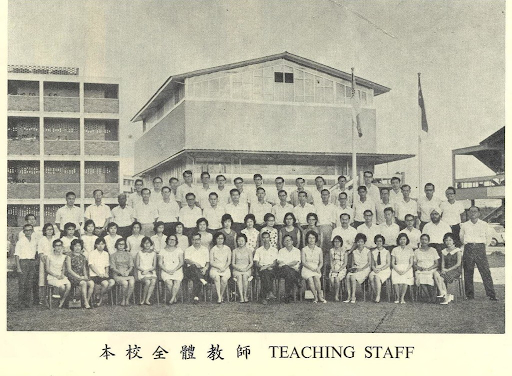
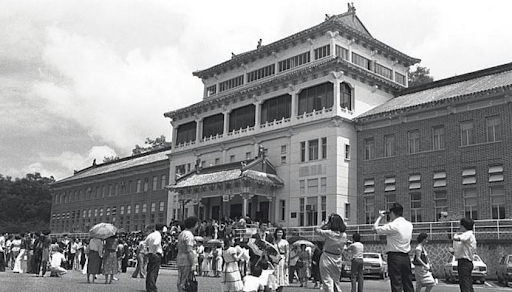
Although the scarcity of resources was certainly taxing, James took it in his stride. It invigorated him with a spirit of resilience and determination, with his hunger for success giving him the gumption to press on in spite of challenges. Throughout his secondary school journey at the recently established New Town Secondary School, he excelled academically, earning a scholarship from Secondary Two onwards that alleviated the financial headaches associated with school. James was also heavily inspired and motivated by his form teacher, who not only encouraged him through difficulties and obstacles, but also imbued invaluable wisdom and guidance on life within him (she formed a rather special place in his heart, with teacher and student keeping in touch for the next six decades). Eventually, James managed to top his cohort for the Ordinary Level examinations, sending him onwards to the National Junior College, where he continued his streak of academic success. He did well enough in the Advanced Level examinations to earn him a place in Accountancy at the then Chinese Nanyang University, colloquially called Nantah.
However, his studies had to be put on hold for the call of duty in the form of National Service. Serving in the army as a non-commissioned officer, James learned some of the most important lessons in life during this period. Beyond enduring the physical training and experiencing the camaraderie between men, National Service taught him the foundational skills and aspects of leadership, something he would greatly benefit from throughout his adult life. His knowledge of military strategy, particularly when it came to operational techniques and logistics, translated into many aspects of the civilian and commercial worlds. At the same time, James also learned about the nuances of interpersonal relationships in a “work” setting, especially regarding mutual respect for both superiors and subordinates. In many ways, the two and a half years in uniform imparted the requisite confidence in James to succeed in the next chapters of his life.
As his time in the service came to an end, James was faced with the stark reality of his situation in life — despite being accepted into Nantah at a time when a vast majority lacked the academic credentials to enter university, he had to decline the offer and plunge himself straight into the working world.
A Family “Workshop”
PICO Far East Holdings has become a leader in the design and facilitation of exhibitions spanning several continents. This is the product of several decades of blood, toil, tears and sweat, and PICO emerged from the most unlikely of beginnings and origins. It was initially started by James’ elder brother, S.L. Chia, who began the company as a producer of outdoor advertising signs, with the primary intent being a means to escape the poverty of his youth. It was this fledgling environment that James entered immediately following his period in uniform, eschewing his aspirations of a tertiary education and plunging himself into what was quickly morphing into a family business.
He started off from right at the bottom, being an office boy responsible for miscellaneous administrative duties as he learned the ropes of the business. Despite this, James always took his work in his stride and enjoyed it immensely, while devoting every fibre of his being to it. He recalls working twelve hours daily, seven days a week, much like many in Singapore at the time. James’ can-do spirit and resilience helped him to successfully weather the innumerable challenges and setbacks associated with the rather limited resources he had access to at the time. At the same time, he still derived significant joy from his work, forming a substantial component of his motivation to continue actively contributing to the growth of PICO.
He also attributes the success of the company to the brothers’ upbringing, with the trials and obstacles omnipresent in their childhood developing the necessary traits and values to persist through the inevitable issues that arose, while their tight bonds and mutual understanding fostered the collaboration and teamwork that served as the catalyst for the immense growth to come. One cannot view the early beginnings of PICO and James’ career in a silo; Rather, it is important to focus on the broader societal and national context. The late 1960s and early 1970s were a period of dramatic growth and development in Singapore, fuelled by the grit and gumption of Singaporeans and local companies. PICO, founded in 1968, was in a prime position to leverage the Singaporean economic miracle and ride the wave of rapid progress and, not to diminish the ability and cohesion of James and his brothers, formed a cornerstone of its emergence and evolution into a thriving enterprise.

Despite his absolute commitment and dedication to his work, James’ young adulthood also witnessed key milestones in his personal life. For one, around the age of twenty-one, a good friend of his (who had been a campmate of his in the army) introduced him to a colleague, Woon Yeow, describing her as being ‘wonderful’. Initially, James held reservations about the prospect of courtship, as he was utterly engrossed in work and felt he had little time for this aspect of life. However over time, the two grew closer and eventually took their vows, starting a partnership in life that has lasted forty-seven years and counting.
Coming of Age
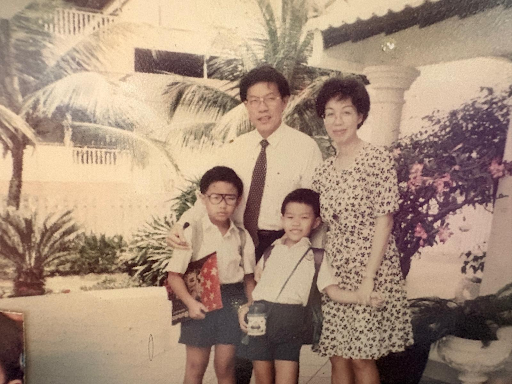
By his late thirties, James was at the helm of an established company with steady growth and was materially comfortable. He had three sons, a happy marriage and a successful career.
However, he always felt a sense of emptiness and a desire to provide for himself, and his identity was almost entirely intertwined with PICO and his commercial achievements. In his continuing pursuit of ever-increasing and lofty ambitions, he would take great pains to learn from others in the mercantile world, with management books and business literature a semi-permanent fixture in his life. It was at this point that James began to explore the spiritual
realm, eventually becoming a Christian at the age of forty. From then on, his faith became a core pillar of his life and worldview, as he found another identity in religion, separate from his material success and business career. He believes that the teachings of the bible were a source of direction in his life, both in personal and commercial aspects, with the values espoused by Christianity combining with his existing family values to comprise a foundation for his decisions and actions.
James maintains that these values were essential for getting through the complications and hurdles of the 1997 Asian Financial Crisis. This economic catastrophe wreaked havoc on his career as PICO was at the receiving end of order cancellations and an evaporation of customers as the regional economy was utterly devastated. James and his brothers, though perturbed, were not deterred from continuing to build and expand their company, as they recovered from the crisis and grew internationally. They played a major role in facilitating landmark events like the 2008 Beijing Olympics and COP29, an international climate conference held in Baku, Azerbaijan, highlighting their global reputation and prestige.

Reflections on Life
James retired at the age of seventy, handing PICO over to a second generation of family members. He has accomplished much in his life thus far, with a united family (and seven grandchildren) as well as an overarching sense of contentment. When asked about what he thought his greatest achievement was, he responded with the refrain “Success is the journey, not the destination.” He believes that life is an ever-changing voyage of twists and turns, but staunchly holds onto his values and ideals. He emphasises the importance of family, viewing good family relationships as being the core to any success and achievement, as encapsulated by the Chinese saying “家和万事兴”, which roughly translates to ‘family harmony leads to universal success’. Looking at the current world, he somewhat regrets the shrinking prioritisation of family relationships, particularly amongst the young, with his utopian vision of an extended family all under one roof appearing to grow increasingly far from reality.
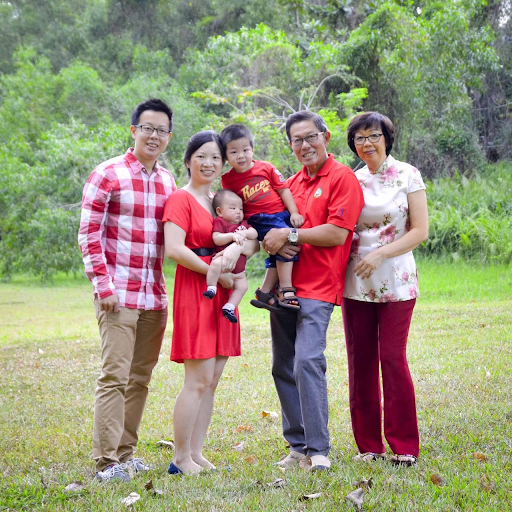
James also has advice for younger members of society. He uses the metaphor of a tree and its roots, with roots representing an individual’s morals and values that are shaped during one’s formative years. Quoting the maxims “养鱼先养水” and “养树先养根”, which both equate to the importance of possessing a firm foundation and substratum for any chance of blossoming in life, he feels that strong roots, especially the values of integrity and respect for others, are prerequisite for one’s ability to flourish. Finally, James advises the young to take their time and not rush through life, cautioning against rash actions and hotheaded decisions that may potentially have an adverse effect on oneself.
In many ways, the experiences of James Chia are a symbol of the country he calls home, going through all the ups and downs of Singapore, and emerging with achievements, both personal and commercial, that few would have expected without the benefit of hindsight. In some respects, he represents a vision of what some of us may aspire to replicate, a feat that most would be hard-pressed to emulate. Most of all, his story acts as a beacon of direction and wisdom that we can all learn from, and he is someone who has truly built and left a lasting legacy for his family and all of us more broadly.